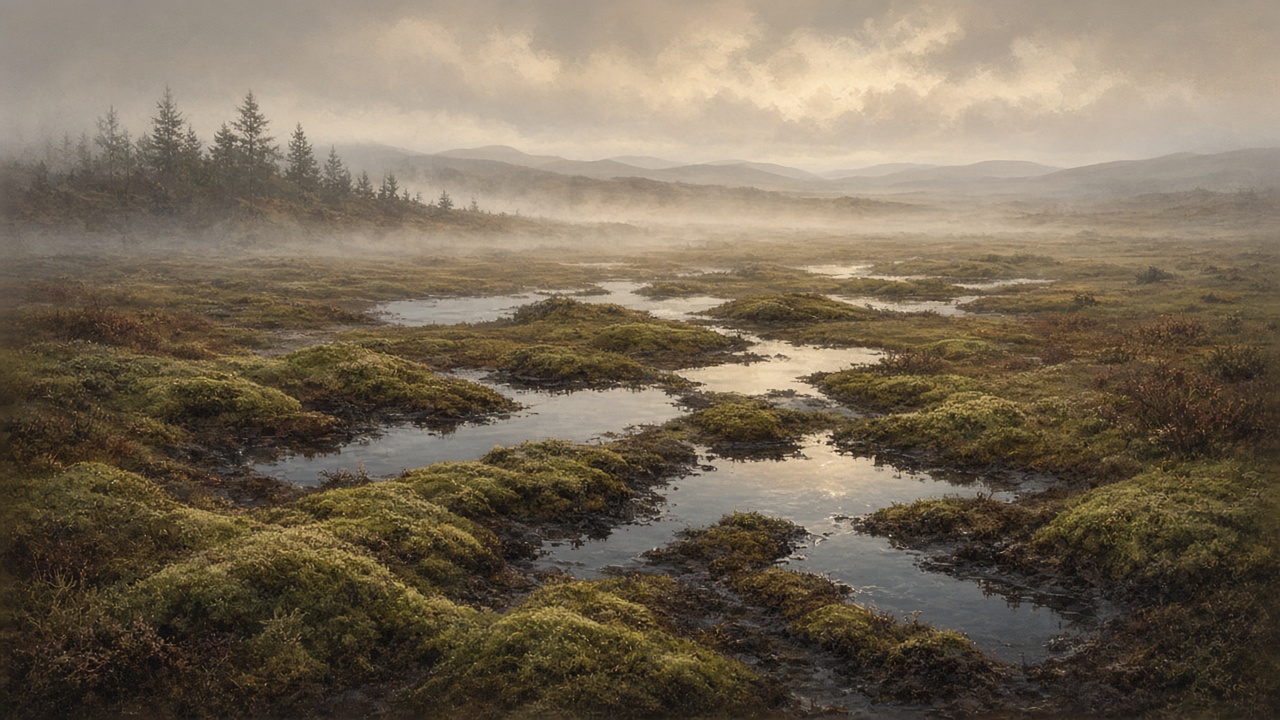
- Peat forms when water prevents dead plants from decomposing.
- Raised bogs (ombrotrophic) receive only rainwater; fens (minerotrophic) are fed by groundwater and streams.
- According to the IUCN, peat bogs can store up to 40% of the world’s soil carbon.
- Drainage releases this carbon and destroys the habitat within a few decades.
Definition and boundaries
A peatland is a wetland where peat accumulates. The IUCN separates sphagnum bogs (group TF1.6), fed mainly by rainfall, from fens (TF1.7), fed by groundwater or surface water richer in minerals. Marshes without peat belong to the Wetlands sheet.
Distribution
Peatlands are most extensive in boreal and cool temperate regions: Canada, Alaska, Scandinavia, Russia and Siberia, Great Britain and Ireland. In western Europe, they survive mainly in mountains (Jura, Vosges, Massif Central, Pyrenees) and on wet plateaus. Tropical peatlands also exist in South-East Asia and Amazonia.
Climate
Raised bogs need a cool climate where rainfall exceeds evaporation for much of the year. Fens depend less on climate, since a spring or water table feeds them continuously. The peat surface stays cool in summer and frosts are frequent there.
Soils, relief and water
Hydrology controls everything. In a raised bog, the peat rises above the water table and receives only rain: the water is acidic (pH 3.5 to 6 according to the IUCN) and very poor in nutrients. In a fen, groundwater brings calcium and minerals, and acidity is lower.
Structuring vegetation
Sphagnum mosses build raised bogs: they hold water and acidify their surroundings. They are accompanied by cotton grasses, ling heather, cranberries and carnivorous sundews. Fens carry more sedges, reeds, brown mosses and sometimes willow and birch.
Characteristic fauna
Peatland fauna is made up mostly of specialised insects and spiders, dragonflies, viviparous lizards and amphibians. Large mammals pass through more than they live there: moose and reindeer (caribou) graze bogs in the boreal zone, and mountain hares find cover. Breeding birds include curlews, golden plovers and cranes.
Functioning and dynamics
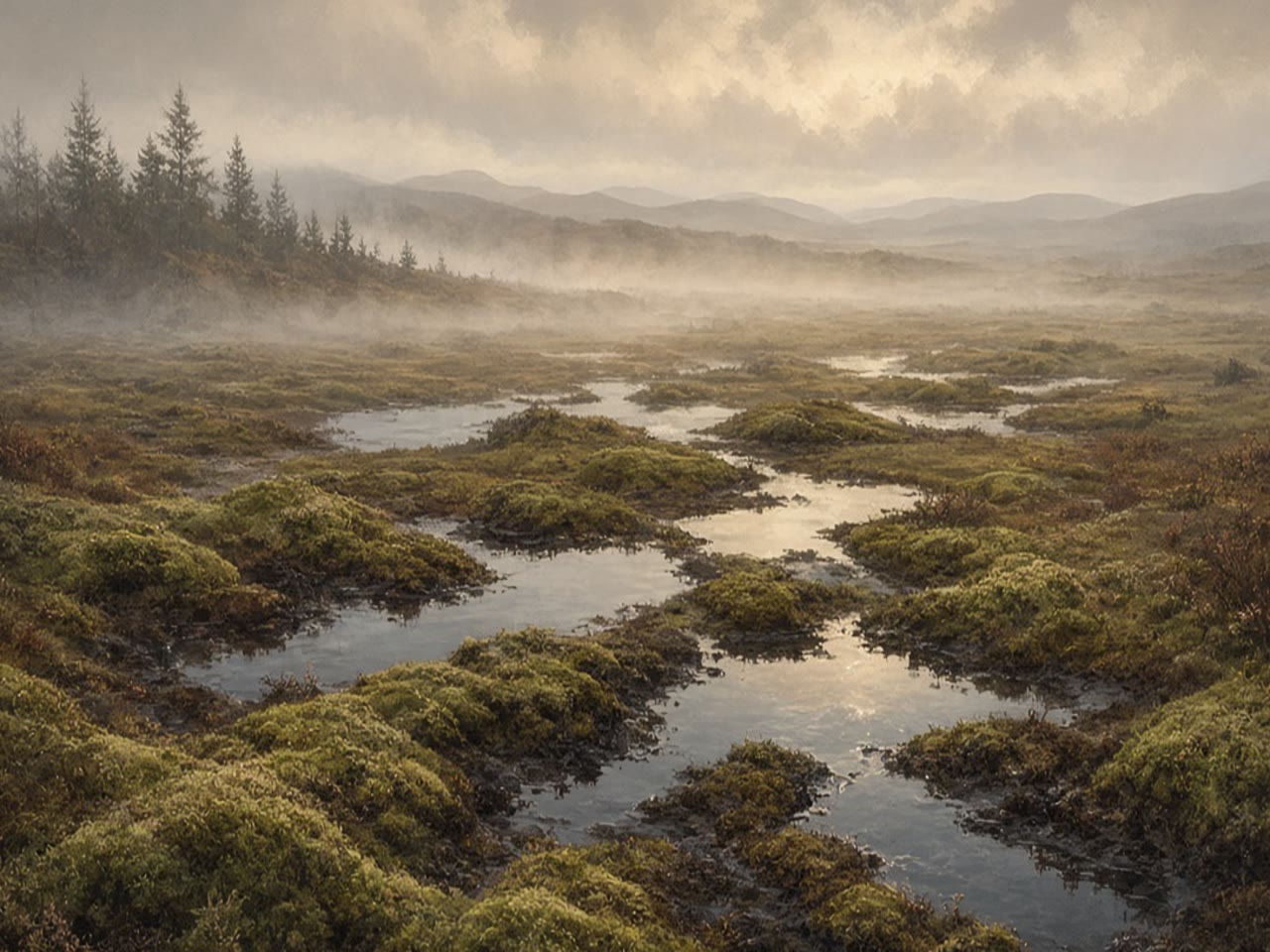
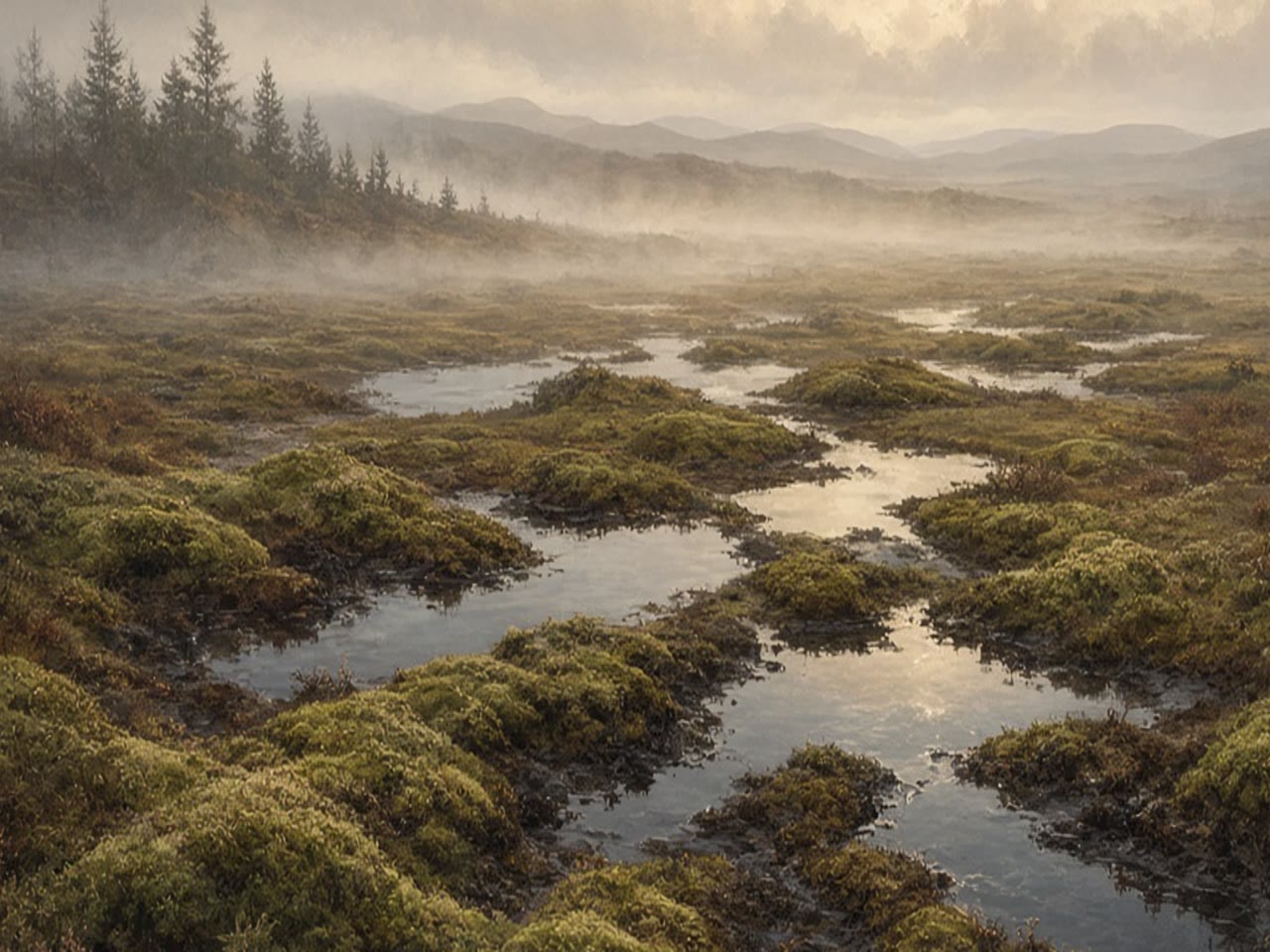
Peat builds up very slowly: a depth of several metres represents thousands of years. A fen can develop into a raised bog once the peat rises above the water table. The surface forms a mosaic of drier sphagnum hummocks and water-filled hollows.
Threats
Drainage for farming or forestry dries out the peat, which oxidises and releases its carbon. Peat extraction for horticulture destroys habitats formed over thousands of years. Nitrogen enrichment favours grasses over sphagnum. Restoration mainly means blocking drains to raise the water level.
Field reading
A peatland surface is unstable: pools and floating sphagnum can give way under your weight. Stay on boardwalks or marked paths. Tracks show in crushed sphagnum and along the edges. Trampling causes lasting damage to vegetation, which recovers very slowly.
This sheet describes a habitat. It publishes no season, quota or hunting authorisation: those rules must be checked with the competent authorities of the territory concerned.
Documented gaps
- Tropical peatlands are not described.
- No mammal species is strictly tied to peatlands: the linked species are visitors.
- Specialised invertebrates are not linked to species sheets.
Sources
- IUCN Global Ecosystem Typology — TF1.6 Boreal, temperate and montane peat bogs (consulted 2026-11-04)
- IUCN Global Ecosystem Typology — TF1.7 Boreal and temperate fens (consulted 2026-11-04)
Related species
Related techniques
Practice information — not a legal authorisation.
Frequently asked questions
What is the difference between a raised bog and a fen?
A raised bog receives only rain and is very acidic and poor; a fen is fed by groundwater or a stream that brings minerals.
Why protect peatlands for the climate?
They store a large amount of carbon. When drained, they release it into the atmosphere as greenhouse gases.
Can a drained peatland be restored?
Often yes, by blocking the drains to raise the water. Sphagnum can then return, but forming new peat takes a very long time.
Does this sheet authorise hunting in this habitat?
This sheet describes a habitat. It publishes no season, quota or hunting authorisation: those rules must be checked with the competent authorities of the territory concerned.
Gallery
Keep exploring
Connect this environment to documented species, techniques and other habitats — without confusing ecological description with hunting authorisation.