Introduced species
- Red deer, introduced from the 1850s, found in almost every mountain range; wapiti in Fiordland.
- Sika deer in the central North Island (Kaweka, Kaimanawa); fallow, sambar, rusa and white-tailed deer (Stewart Island) more locally.
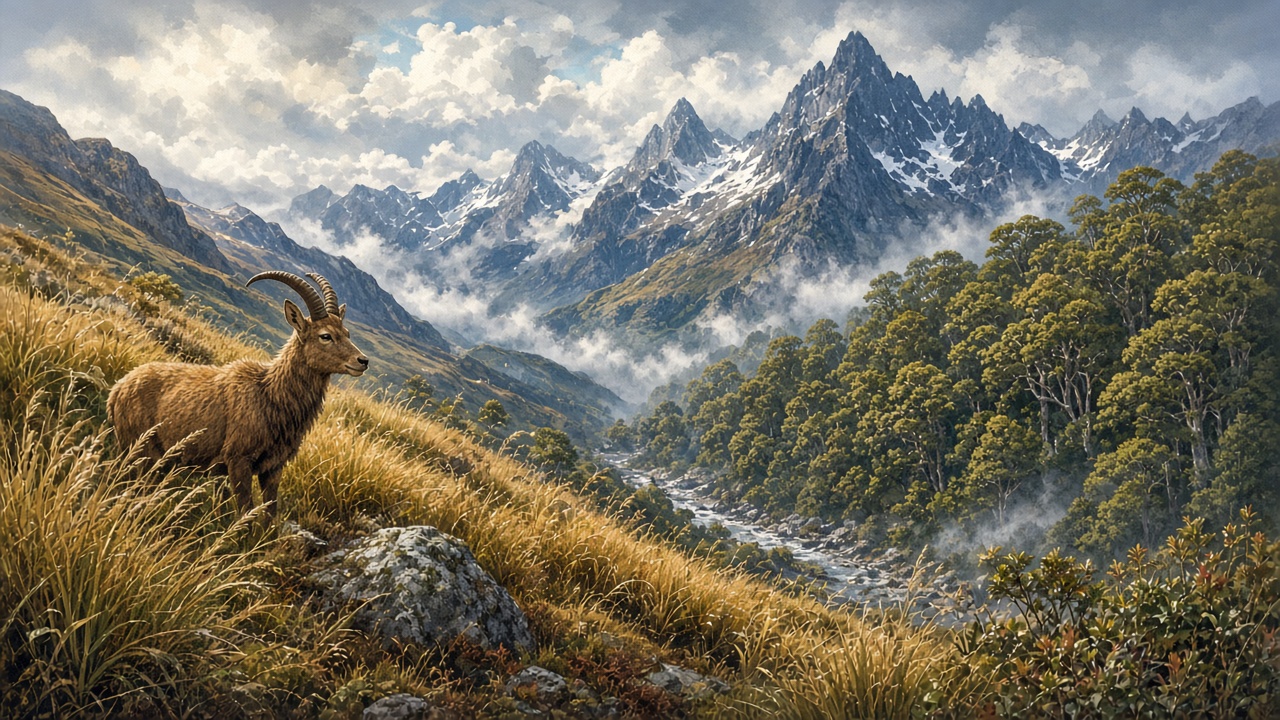
- Himalayan tahr, introduced in 1904, and chamois, introduced in 1907, in the Southern Alps.
- Feral goats and pigs, widespread.
Pest status
The Wild Animal Control Act 1977 classes deer, tahr, chamois, goats and pigs as “wild animals” to be controlled, not as protected game. The Department of Conservation (DOC) carries out control operations, sometimes by aerial shooting, notably against tahr under the 1993 Himalayan Thar Control Plan. Since 2013 the Game Animal Council has represented hunters and can have herds of special interest recognised, such as the Fiordland wapiti.
Forests without browsers
New Zealand’s flora evolved without herbivorous mammals. Browsing by deer and goats prevents many understorey species from regenerating, and tahr weigh on alpine grasslands. Recreational hunting helps limit numbers, without being enough on its own in the worst-affected areas.
Permits and firearms
Hunting on conservation land requires a DOC hunting permit, free and issued online, which sets out open areas and local rules. A foreign visitor must obtain a visitor firearms licence from New Zealand Police before arrival.
Biosecurity and mountain safety
Ministry for Primary Industries biosecurity rules require boots, clothing and gear to be declared and cleaned on entering the country. In the field, flash floods, fog and the terrain of the Southern Alps make a distress beacon, a filed route plan and a fallback along marked tracks essential.