Species profiles
Red-legged partridge (Alectoris rufa)
Red-legged partridge is the emblematic game of the Alentejo and inland plateaus. It is hunted over pointing dogs or driven.
European rabbit (Oryctolagus cuniculus)
The rabbit, native to the Iberian Peninsula, is a keystone species. Its populations have been sharply reduced by myxomatosis and rabbit haemorrhagic disease.
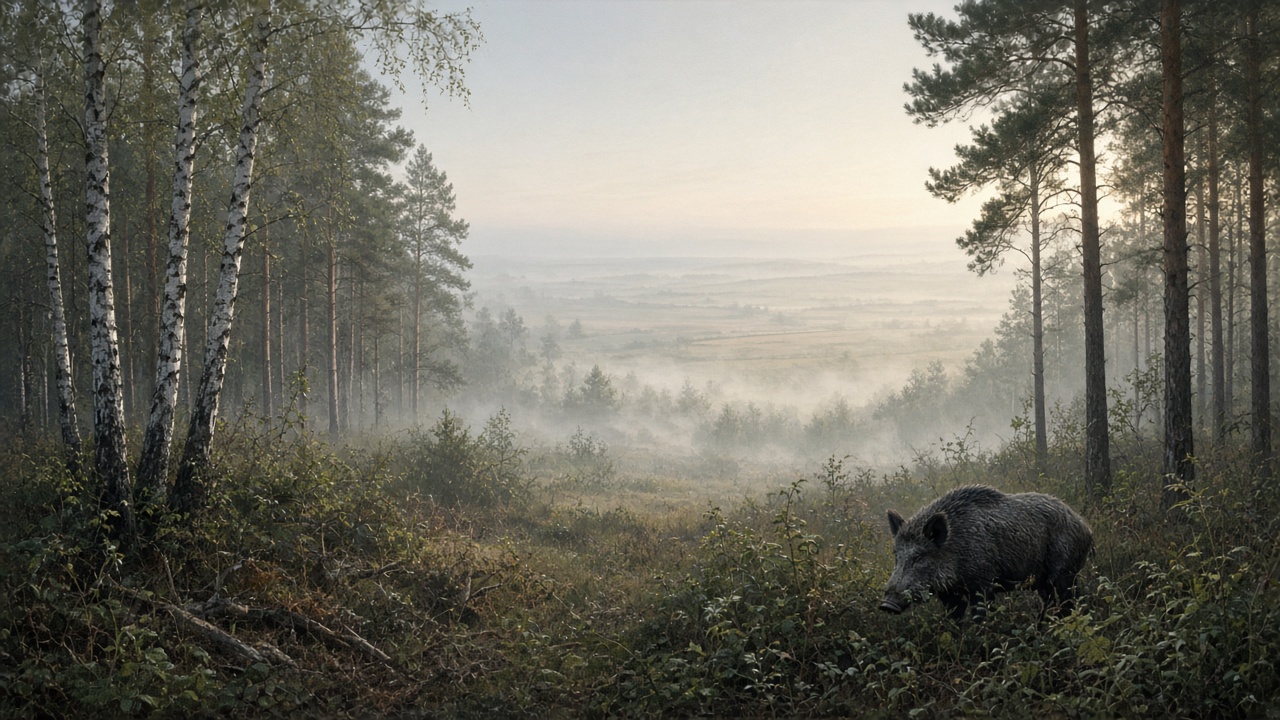
Wild boar (Sus scrofa)
Wild boar is the country’s main big game. It is hunted in montarias, drives with dogs and standers, and at night from a stand.
Hunting landscapes
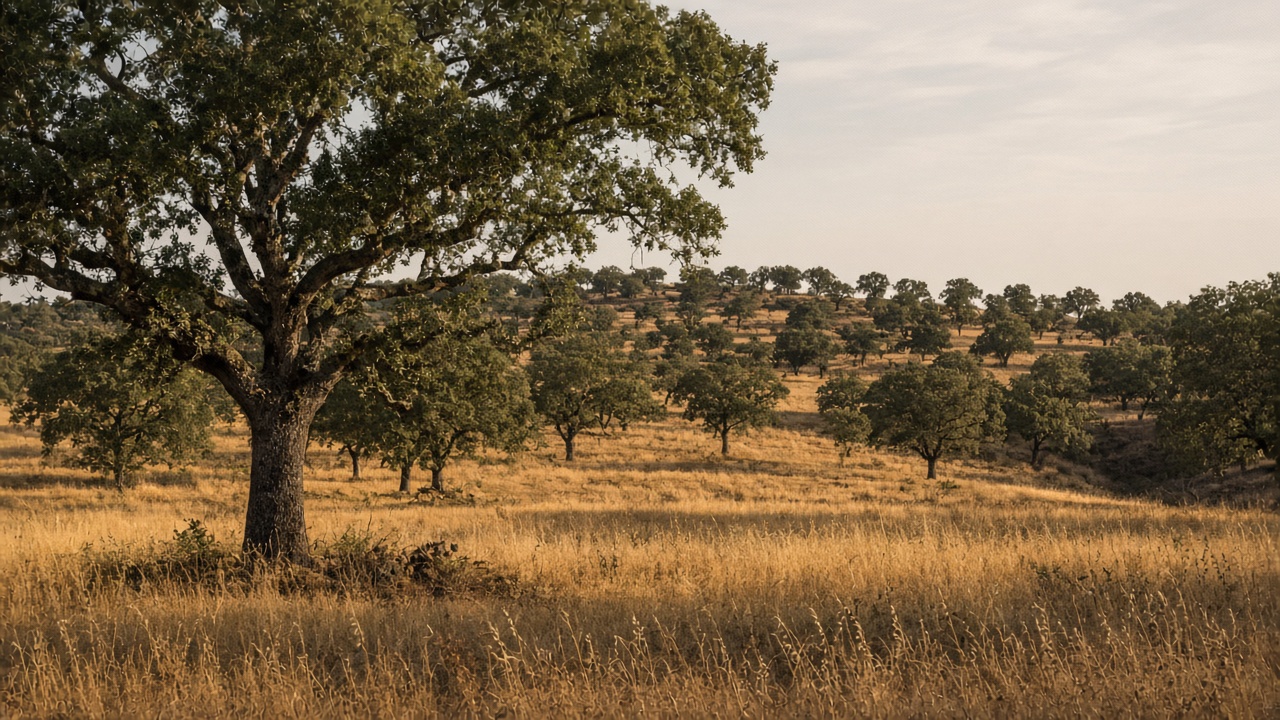
Southern Portugal’s Alentejo is dominated by the montado, a savannah of cork and holm oaks that suits small game. The north is more mountainous and wooded, with the Trás-os-Montes ranges and the Serra da Estrela.
Hunters from abroad
Non-resident foreign hunters obtain a special hunting licence with their national licence. Tourist hunting zones (ZCT) host most visitors.
Wild rabbit: season and daily limit depend on the land
Portaria n.º 100/2021 of 10 May 2021 set the wild rabbit rules for the 2021-2022 to 2023-2024 seasons (in force from 1 June 2021). On managed land, meaning a tourist, associative or municipal hunting zone with a management plan, hunting runs from 1 September to 31 December and the daily bag follows that plan. On unmanaged land the season is shorter, from the first Sunday of October to the last Sunday of November, with a single rabbit per hunter per day. These dates apply to the period cited; later portarias, including n.º 67/2024, which we could not consult, may have changed them. Check the calendar in force with the ICNF before you travel (text read through an unofficial mirror of the Diário da República).
A rabbit weakened by disease
A review by researchers at INIAV and the Lisbon veterinary faculty, published in the magazine Caça & Cães de Caça (latest data: 2019), says only 5 to 10% of the rabbit populations of fifty years ago remain, and that the species was listed as threatened by the IUCN in 2019. In the first halves of 2018 and 2019, 70% of carcasses found in the field and sent to INIAV tested positive for RHDV2, the main cause of death identified. By contrast, among leporids hunted over the previous three seasons, the share testing positive for myxomatosis or RHDV stayed below 5% per season.
Red-legged partridge: local decline, private management
The same source describes an “abrupt” decline of the red-legged partridge in some areas, blamed on habitat fragmentation from intensive farming, systematic pesticide use and hybridisation with introduced species. It adds that hunters and landowners pay for feeding, breeding areas and predator control themselves. We found no partridge dates or national quota in the documents we read, so the current season has to be checked with the ICNF.
The territorial framework in figures
The ICNF report of August 2023 counts 5,302 hunting zones covering 6,973,660 hectares, 219,459 hunter cards and 663 non-hunting zones covering 58,043 hectares. It also gave harvest numbers, but provisional and incomplete ones, so we do not reuse them.
Key figures
Sources: Portaria n.º 100/2021 (text relayed by informador.pt); INIAV, Caça & Cães de Caça; ICNF, August 2023 report on hunting zones.