- Family
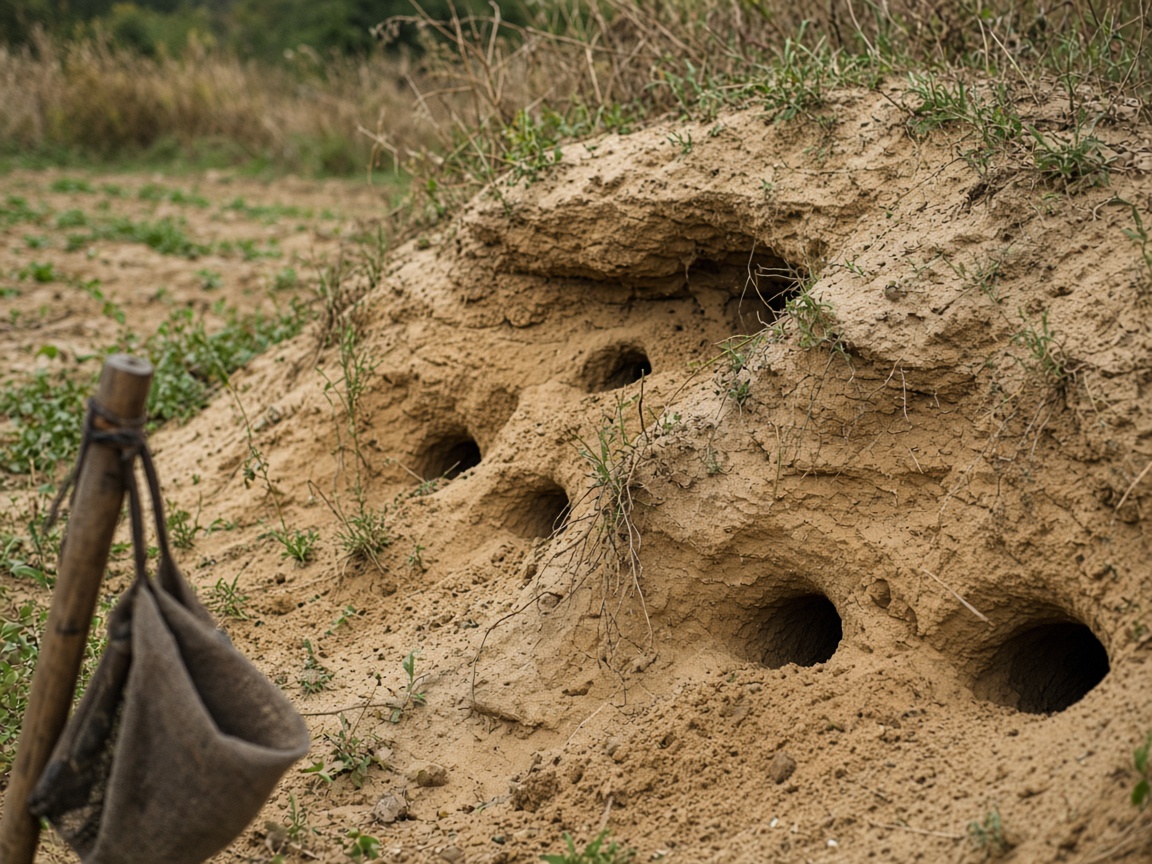
- Working burrows and earths
- Difficulty
- Moderate: setting nets silently, finding every hole and dealing with a ferret that lies up
- Organisation
- A small group: one ferreter and a few helpers or guns
- Key gear
- Ferrets, purse nets and pegs, locator, spade, carrying box
- Season
- Varies by country and the local status of rabbits: check with the relevant authority
- Who it suits
- Patient people, at ease with animals, who enjoy working in a small team
What is the idea behind ferreting?
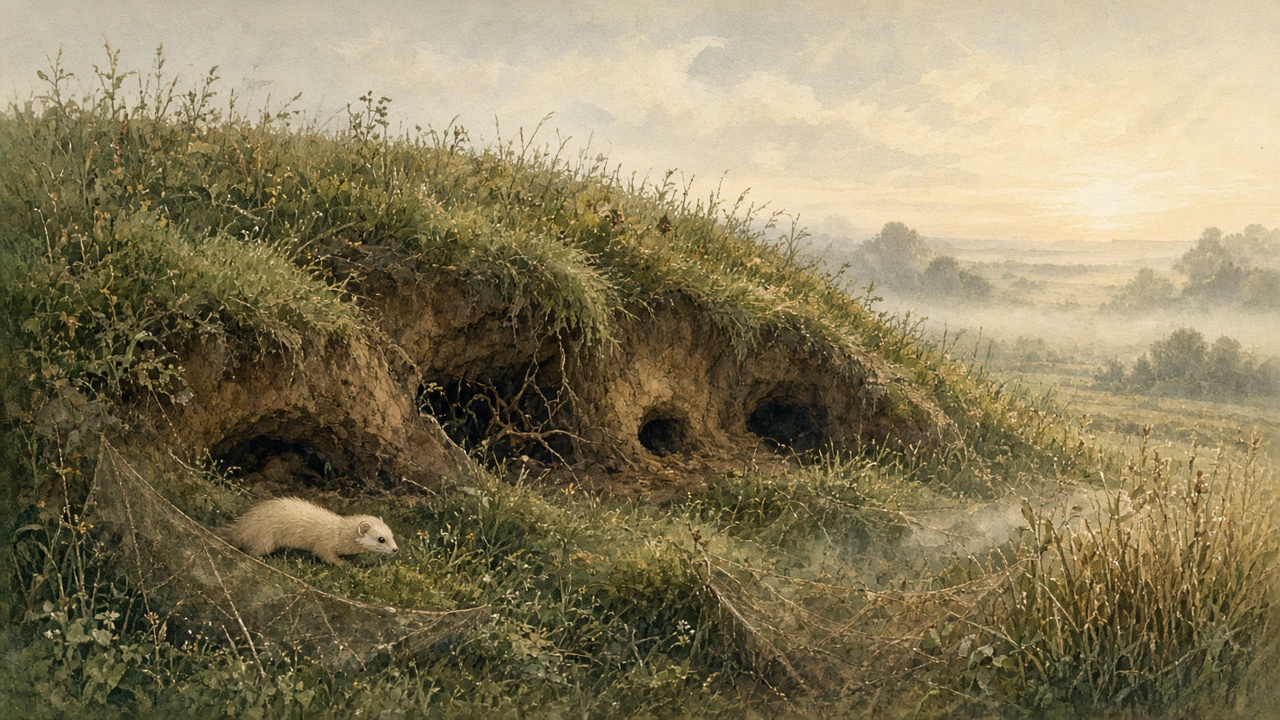
The ferret is not there to kill rabbits but to move them. A rabbit that senses a ferret in the burrow tries to escape through another hole, often at great speed. The ferreter’s skill lies in preparing the warren so that the bolt ends in a net or in front of a well-placed gun, and in keeping things quiet above ground: a rabbit that hears footsteps or voices overhead will often stay below and face the ferret.
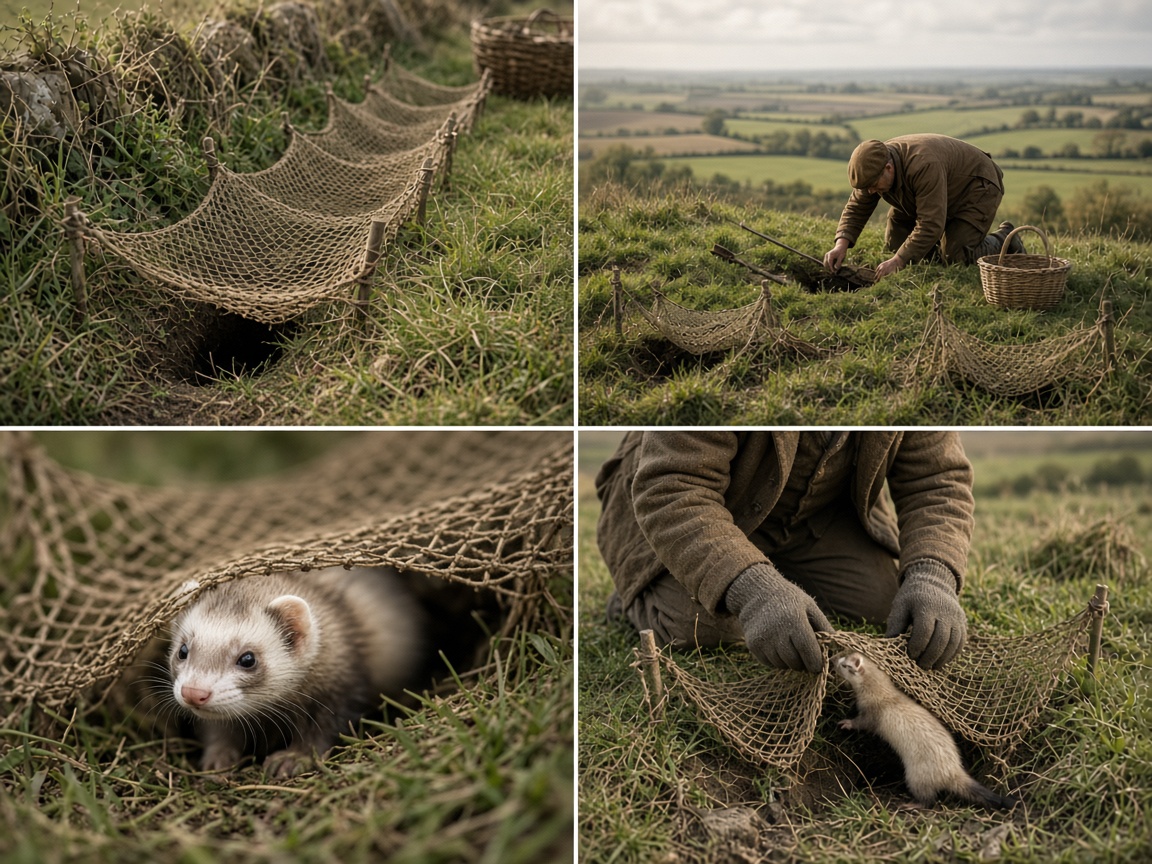
Two methods are used. With purse nets, every hole is covered by a net held by a peg; the bolting rabbit wraps itself up and the ferreter takes it by hand. With guns, the shooters stand well back, each with a defined safe arc, and take the rabbit once it is away from the burrow. Some combine both, or fly a goshawk or Harris hawk instead of using a gun.
The main worry is a ferret that stays underground, often because it has cornered or killed a rabbit in a dead end. A locator, a small transmitter collar, then shows from above ground where the ferret is and how deep, so you dig in the right place rather than at random. At the end of the day, dug holes are filled in and nets picked up.
How does ferreting work in the field?
What equipment do you need for ferreting?
- Enough purse nets to cover every hole, with their pegs
- A locator: a collar for the ferret and a receiver
- A ventilated carrying box with bedding for the ferrets
- A spade and kit to fill in holes properly afterwards
Safety rules for ferreting
- Agree each gun’s safe arc before starting and never shoot towards someone bending over a net
- Wear thick gloves: a ferret may bite, especially if handled roughly
- Dig carefully in loose soil or under roots, where the sides of the hole may collapse
- Never shoot towards a hole where the ferret or dog may come out
Common mistakes in ferreting
- Missing a hidden bolt-hole, so rabbits escape unseen
- Talking and stamping over the warren, which makes rabbits stay underground
- Leaving nets loosely pegged so that a rabbit pulls them off or goes through
- Leaving the site open or damaged after the day
Which species are hunted by ferreting?
Where is ferreting practised?
England
In England, ferreting for rabbits is done with purse nets, long nets or guns. The Hunting Act 2004 targets hunting mammals with dogs, not with ferrets, and its Schedule 1 exempts hunting rabbits and rats, dogs included, on land the hunter owns or has the occupier’s permission to use (paragraphs 3 and 4).
France
In France, ferreting (chasse au furet) targets wild rabbits. Its conditions may be subject to specific rules in each département, and rabbits may be listed locally as a species likely to cause damage, which brings a particular framework. The departmental hunting federation and the OFB explain local rules.
Scotland
In Scotland, rabbits are ferreted with purse nets or guns. The Hunting with Dogs (Scotland) Act 2023 excludes rats and mice from its definition of a wild mammal, but not rabbits: a dog used alongside ferrets must fall within an exception, such as preventing serious damage to crops, woodland or livestock (section 3) or game shooting (section 6), with no more than two dogs and the landowner’s permission.
Spain — Castilla y León
In Spain, ferreting (caza con hurón) targets rabbits, a key species in Iberian ecosystems that also damages crops in some districts. The use of ferrets is regulated by the autonomous communities, which may restrict it or set conditions. MITECO and the regional hunting federation provide information on the rules.
Rules vary by country and region: check with the local authority. See the sources
Ferreting compared with neighbouring techniques
Ferreting and terrier work both use an animal that goes underground, but the ferret moves rabbits that bolt, whereas the terrier locates a fox or badger that stays below and is reached by digging. Walked-up shooting flushes rabbits from cover above ground; ferreting finds them in the burrow. Combined with falconry, it leaves the bolting rabbit to a goshawk or Harris hawk.
Key terms in ferreting
- ferret
- A domestic mustelid put into a warren to bolt rabbits.
- purse net
- A net pegged over a rabbit hole that closes around a bolting rabbit.
- warren
- A network of burrows occupied by a colony of rabbits.
- locator
- A transmitter collar worn by a ferret or terrier and a handset that shows from above ground where it is and how deep.
Frequently asked questions about ferreting
What is ferreting?
It is a way of hunting wild rabbits in which a ferret is put into the burrow to bolt them; they are caught in purse nets over the holes or shot away from the warren.
Does the ferret kill the rabbits?
It can when a rabbit is trapped in a dead end, but that is not its job. The ferreter wants the rabbit to bolt; a ferret that kills often lies up underground beside its prey.
Should a ferret be muzzled?
Some ferreters use a muzzle to reduce kills underground, but the practice has declined since locators became common. Habits vary between ferreters and countries.
What if the ferret does not come out?
Wait a while, then use the locator to find its position and depth and dig straight down to it. Without a locator you listen and watch the holes, which can take a long time.
Nets or guns: how do you choose?
Purse nets allow ferreting without shooting, near houses or livestock, and give undamaged rabbits. Guns suit warrens too big to net completely, provided safe arcs are agreed.
Can you hunt hares with ferrets?
No. Hares do not live in burrows: they lie up in a form on the surface. Ferrets are only used for animals that shelter underground, such as wild rabbits.
Ferreting in pictures
Sources and references on ferreting
- Office français de la biodiversité (OFB) — Chasse, permis de chasser et police de l’environnement (consulted on )
- Fédération nationale des chasseurs (FNC) — Chasseur de France : pratiques, sécurité et fédérations départementales (consulted on )
- Légifrance — Code de l’environnement, livre IV, titre II : chasse
- Boletín Oficial del Estado (BOE) — Legislación estatal y autonómica de caza (consulted on )
- Ministerio para la Transición Ecológica y el Reto Demográfico (MITECO) — Caza y biodiversidad (consulted on )
- Real Federación Española de Caza (RFEC) — Modalidades, licencias y federaciones autonómicas (consulted on )
- British Association for Shooting and Conservation (BASC) — Shooting advice and codes of practice (consulted on )
- Game & Wildlife Conservation Trust (GWCT) — Game and wildlife research (consulted on )
- legislation.gov.uk — Hunting Act 2004 (England and Wales) (consulted on )
- Boletín Oficial del Estado (BOE) — Ley 4/2021, de 1 de julio, de Caza y de Gestión Sostenible de los Recursos Cinegéticos de Castilla y León (texto consolidado) : arts. 32-40, 50-51 y anexo III (modalidades) (consulted on )
- Légifrance — Arrêté du 1er août 1986 relatif à divers procédés de chasse (art. 7 aides électroniques, art. 8 procédés interdits et furet) (consulted on )
- legislation.gov.uk — Hunting Act 2004, Schedule 1 : Exempt hunting (paras 1 à 9) (consulted on )
- legislation.gov.uk — Hunting with Dogs (Scotland) Act 2023, section 1 : infraction et définition du « wild mammal » (rat et souris exclus) (consulted on )
Practice information — not a legal authorisation.