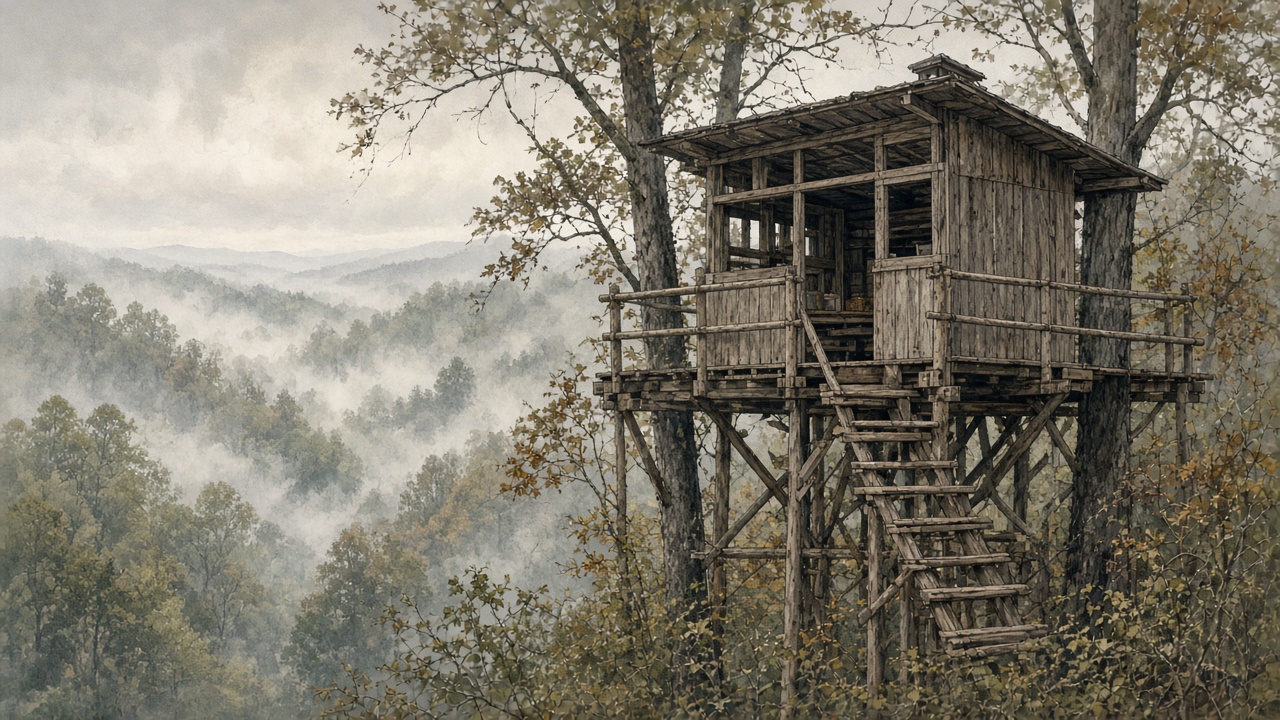
- Family
- Elevated position
- Difficulty
- Moderate: the shooting is simple, but building the hide, working the decoys and staying safe at height take know-how
- Organisation
- A small group, often a family, with a lookout and one or more guns
- Key gear
- A camouflaged hut, decoys and perches, binoculars, cords, a shotgun
- Season
- During the autumn migration, on dates set by the competent authority: check with the departmental federation
- Who it suits
- People who enjoy shared, traditional hunting and are happy to spend long hours in a hide
What is the idea behind palombière pigeon shooting?
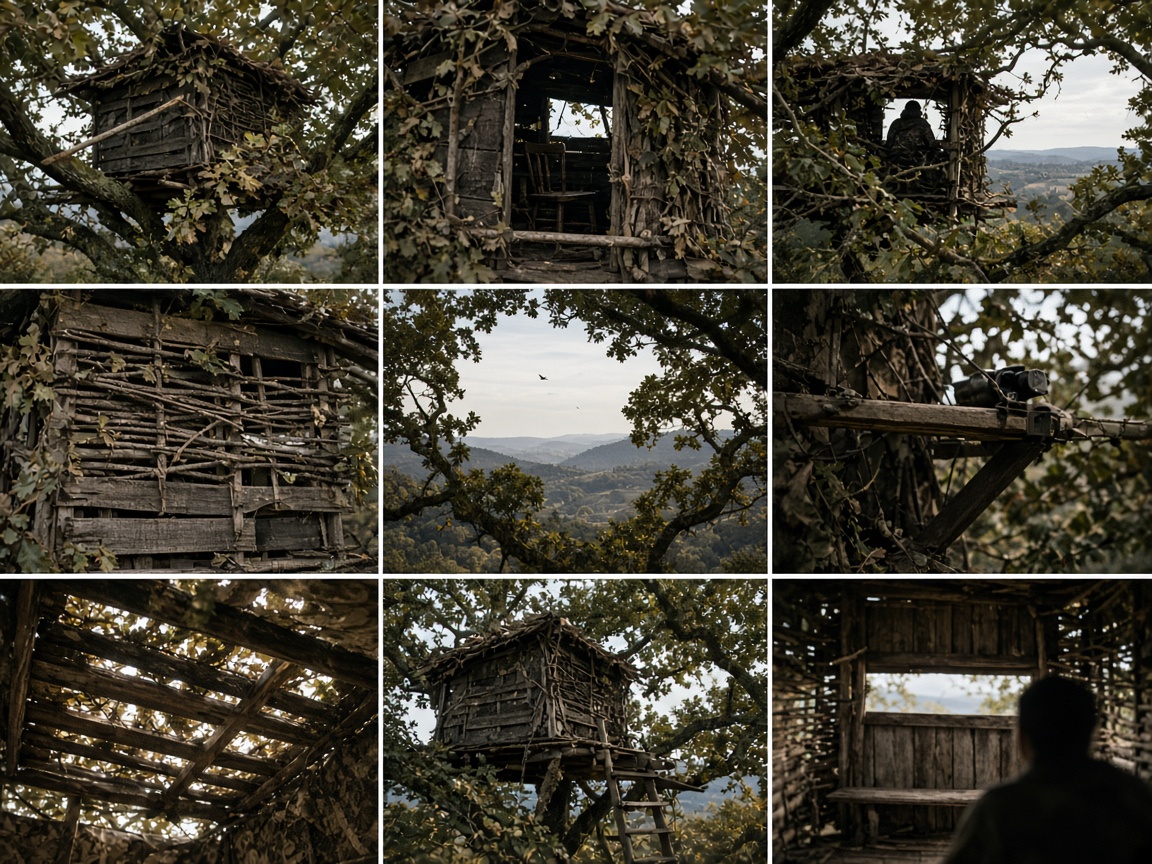
In autumn, flocks of wood pigeons cross south-west France on their way to the Iberian Peninsula. The palombière is built on their route: a hut covered in branches, linked by leafy tunnels, with platforms in the trees from which incoming flocks can be seen. Setting one up takes a great deal of work, often shared by a family or a group of friends, and the same site is kept up year after year.
When a flock approaches, decoys on perches at the top of the trees are worked by cords from the hut: they flap and appear to land, which reassures passing birds. The lookout calls the flock, everyone falls silent, and pigeons that settle near the hut are shot, usually perched, through openings in the walls.
Decoys may be artificial or live, where the rules allow it and on the conditions they set. The EU Birds Directive in particular bans the use of blinded or mutilated live birds as decoys. Traditional netting methods fall under special regimes and are not described here.
How does palombière pigeon shooting work in the field?
What equipment do you need for palombière pigeon shooting?
- Artificial decoys or, where permitted, live ones, with their moving perches
- Binoculars to pick up flocks at a distance
- A safety harness for climbing to platforms in the trees
- A cord or strap to haul gear up and down instead of carrying it
Safety rules for palombière pigeon shooting
- Agree the shooting directions for each opening before every day and never shoot towards another hut, a tree platform or a path
- Climb to tree platforms clipped on with both hands free, then haul the shotgun up empty
- Load only on the signal, inside the hut, and unload before going out for any reason, even to pick up a bird
- Check the ladder, platform and fixings before every climb
Common mistakes in palombière pigeon shooting
- Talking or moving in the hut while a flock is circling
- Working the decoys too early or too sharply, which unsettles the flock
- Shooting at a high flock that has not settled, at the risk of wounding birds out of range
- Climbing up or down with a loaded firearm
Which species are hunted by palombière pigeon shooting?
Where is palombière pigeon shooting practised?
France
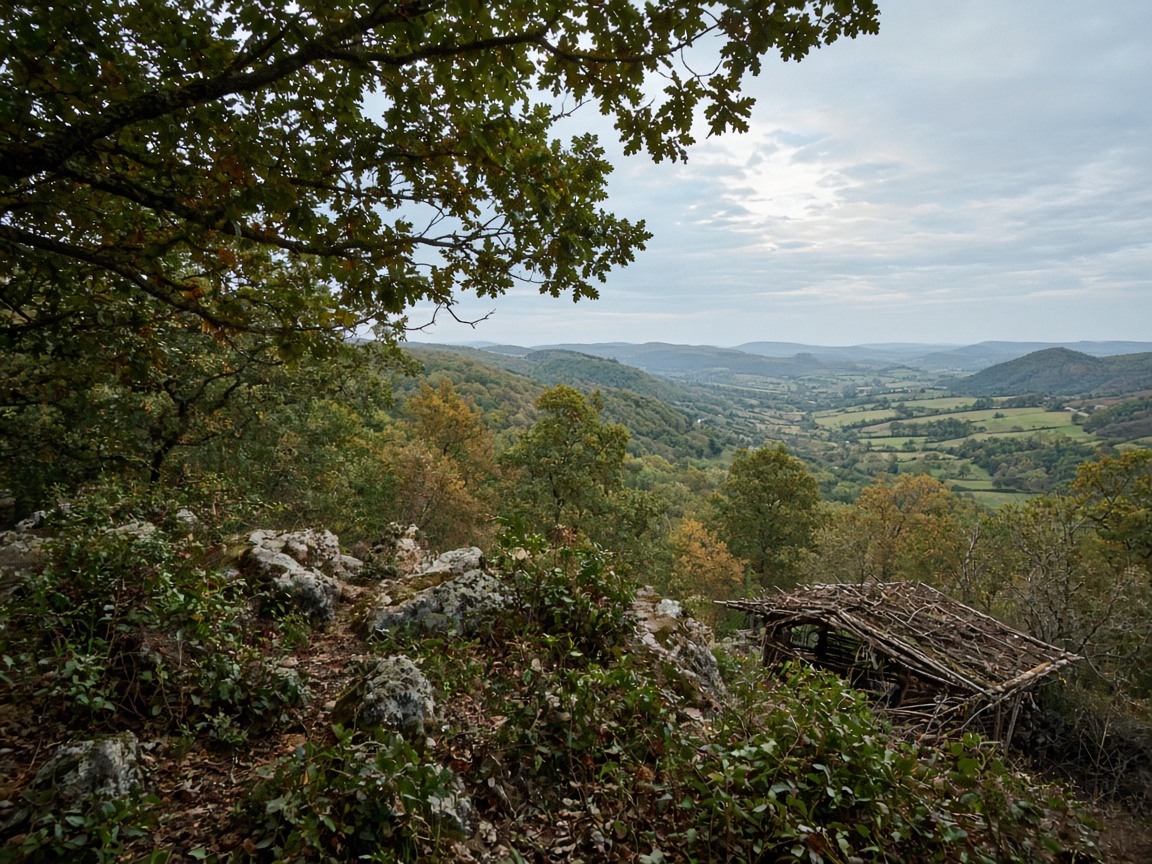
In France, the palombière is a tradition of the south-west, from the Landes and Gironde to Béarn and the Basque Country. Periods, conditions for using live decoys and permitted methods are set by national and departmental texts; the departmental hunting federation and the OFB explain the rules in force.
Rules vary by country and region: check with the local authority. See the sources
Palombière pigeon shooting compared with neighbouring techniques
A palombière is a shared position, often raised, devoted to a single migratory species, which sets it apart from solitary stand hunting for big game. Like decoying wildfowl, it uses decoys to draw birds in, but the pigeons settle in trees rather than on water. It also differs from pigeon shooting over decoys laid out on a field, where birds come in to feed, and from the fixed positions on the Pyrenean passes, where flocks are usually shot as they cross, without being brought down. Flighting, finally, waits for birds on their daily movements, with no hut or worked decoys.
Key terms in palombière pigeon shooting
- palombière
- A hide in south-west France, often raised among trees, used to draw migrating wood pigeons with decoys.
- palombe
- The south-west French name for the wood pigeon, Columba palumbus, especially autumn migrants.
- decoy
- An artificial bird, or a live one where the law allows it, set out to draw birds in.
- safety harness
- A harness tethered to the tree or structure that holds the hunter if they fall from a raised stand.
- flight
- The dawn or dusk movement of birds between roosting and feeding areas, and shooting them as they pass.
Frequently asked questions about palombière pigeon shooting
What is palombière pigeon shooting?
It is a shared shoot for migrating wood pigeons, from a camouflaged hut towards which flocks are drawn by decoys set in the trees.
Why is a palombière often up in the trees?
Wood pigeons like to settle on treetops. Perches and raised platforms let you see flocks coming and place the decoys where the birds look to land.
Are live decoys allowed?
That depends on the country and the texts in force. In France their use is regulated; in any case the EU Birds Directive bans blinded or mutilated live birds. Check with the departmental federation.
When do the pigeons pass through?
In autumn, during their migration south. Passage days depend on weather and wind; the dates when shooting is open are set by the competent authority.
Is a palombe different from a wood pigeon?
No, it is the same species: palombe is the south-west French name for the wood pigeon, Columba palumbus, especially the migrating birds.
Who does what in a palombière?
A lookout spots the flocks, one or more people work the decoys from the hut and the guns wait for the signal. Roles are often shared within a family or a group of friends.
Palombière pigeon shooting in pictures
Sources and references on palombière pigeon shooting
- Office français de la biodiversité (OFB) — Chasse, permis de chasser et police de l’environnement (consulted on )
- Fédération nationale des chasseurs (FNC) — Chasseur de France : pratiques, sécurité et fédérations départementales (consulted on )
- Légifrance — Code de l’environnement, livre IV, titre II : chasse
- EUR-Lex — Directive 2009/147/CE concernant la conservation des oiseaux sauvages (consulted on )
- Real Federación Española de Caza (RFEC) — Modalidades, licencias y federaciones autonómicas (consulted on )
- Boletín Oficial del Estado (BOE) — Legislación estatal y autonómica de caza (consulted on )
- Boletín Oficial del Estado (BOE) — Ley 4/2021, de 1 de julio, de Caza y de Gestión Sostenible de los Recursos Cinegéticos de Castilla y León (texto consolidado) : arts. 32-40, 50-51 y anexo III (modalidades) (consulted on )
- Légifrance — Arrêté du 4 novembre 2003 relatif à l'usage des appeaux et des appelants pour la chasse des oiseaux de passage, du gibier d'eau et de certains corvidés (consulted on )
Practice information — not a legal authorisation.