Aunerys
Hunting Fishing · soon
FR EN ES
Territories · 2 min read

Hunting in Namibia: landscapes, species and organisation

An overview of hunting in Namibia: acacia savannah, the Namib Desert and the central plateau. Key species (greater kudu, gemsbok, springbok), main hunting methods and the reference authority.

Byline: Pieter van Wyk Published
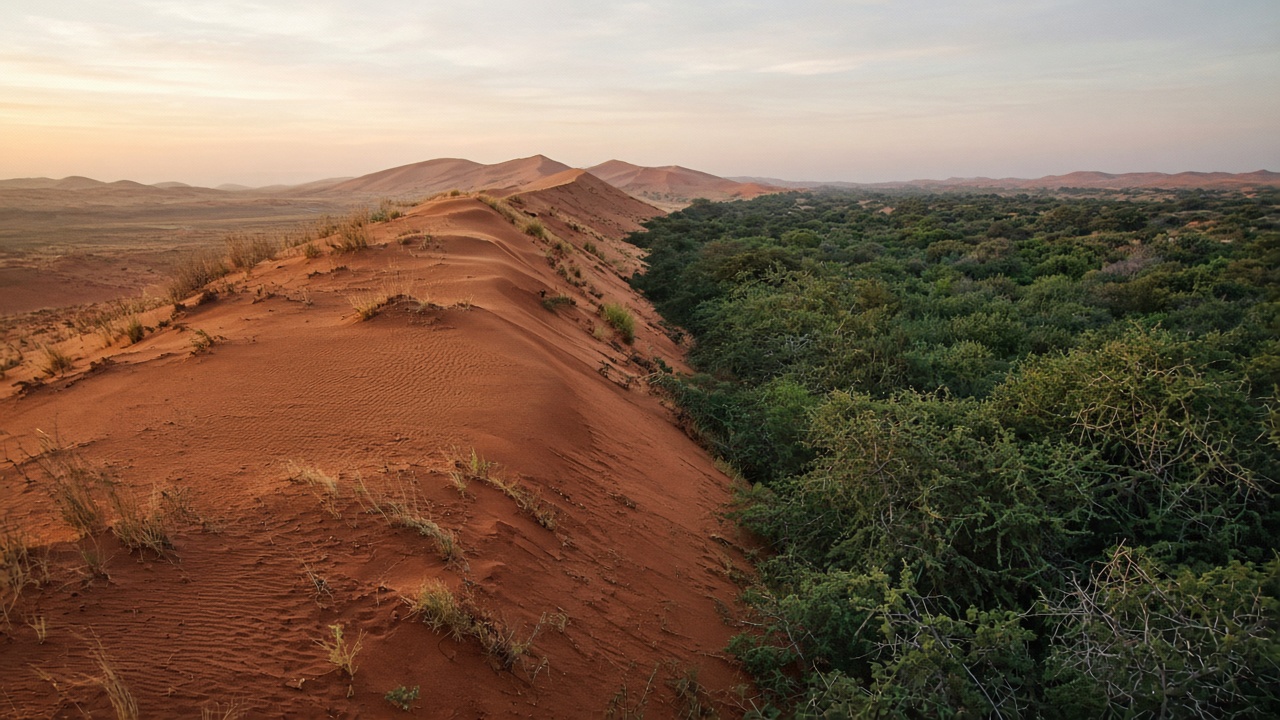
Natural landscape in Namibia — AI-generated illustration AI-generated illustration for Aunerys
Short answer

Namibia combines the coastal Namib Desert, the central plateau of savannah and livestock farms, and the wetter north-east (Zambezi). Facts compiled on 4 November 2026.

Written by Pieter van Wyk Facts compiled on 4 November 2026 Updated
Country fact sheet
Reference authority Ministry of Environment, Forestry and Tourism (MEFT)
Framework law Nature Conservation Ordinance 4 of 1975; Nature Conservation Amendment Act 5 of 1996 (conservancies)
Decision level national
Licence Trophy hunting by foreigners must take place with a professional hunter registered with MEFT.
Facts compiled on 4 November 2026

Introduction

Namibia offers contrasting hunting landscapes — acacia savannah, the Namib Desert and the central plateau — where greater kudu and gemsbok play a central role. This overview explains how hunting is organised and where to find official information.

Hunting landscapes

Namibia combines the coastal Namib Desert, the central plateau of savannah and livestock farms, and the wetter north-east (Zambezi). Much wildlife lives on private and communal land.

Key species

Main hunting methods

  • Walk-and-stalk
  • Conservancy hunting

Wildlife health

A veterinary cordon fence (the Red Line) separates the north, where foot-and-mouth disease occurs, from meat-export areas. Moving game meat between zones is controlled.

Becoming a hunter

Trophy hunting by foreigners must take place with a professional hunter registered with MEFT. Each animal requires a permit, and CITES species need export documents.
Frequently asked questions

What are the key species in Namibia?

Key species include greater kudu (Tragelaphus strepsiceros), gemsbok (Oryx gazella), springbok (Antidorcas marsupialis).

Which hunting practices exist in Namibia?

The main hunting methods are walk-and-stalk, conservancy hunting.

Destination Namibia — hunting and nature →

Conclusion

Three landmarks to keep: acacia savannah, the Namib Desert and the central plateau for the habitats, greater kudu and gemsbok for the species, and Ministry of Environment, Forestry and Tourism (MEFT) for the rules in force.
Sources : MEFT — ministère de l’Environnement, des Forêts et du Tourisme; NACSO — association namibienne d’appui à la gestion communautaire
The author Pieter van Wyk Articles on arid habitats, savannas and local practice in Namibia. Editorial byline of the Aunerys desk. It does not attest to a verified local expertise. View profile →

Read next

Acacia savanna at golden hour, South Africa — AI-generated illustration AI-generated illustration for Aunerys
Territories · 2 min

Hunting and conservation in South Africa: framework, species and debates

Cork oak dehesa in golden light, Spain — AI-generated illustration AI-generated illustration for Aunerys
Territories · 3 min

Landmarks for discovering hunting in Spain

Natural landscape in Belgium — AI-generated illustration AI-generated illustration for Aunerys
Territories · 4 min

Hunting in Belgium: landscapes, species and organisation